


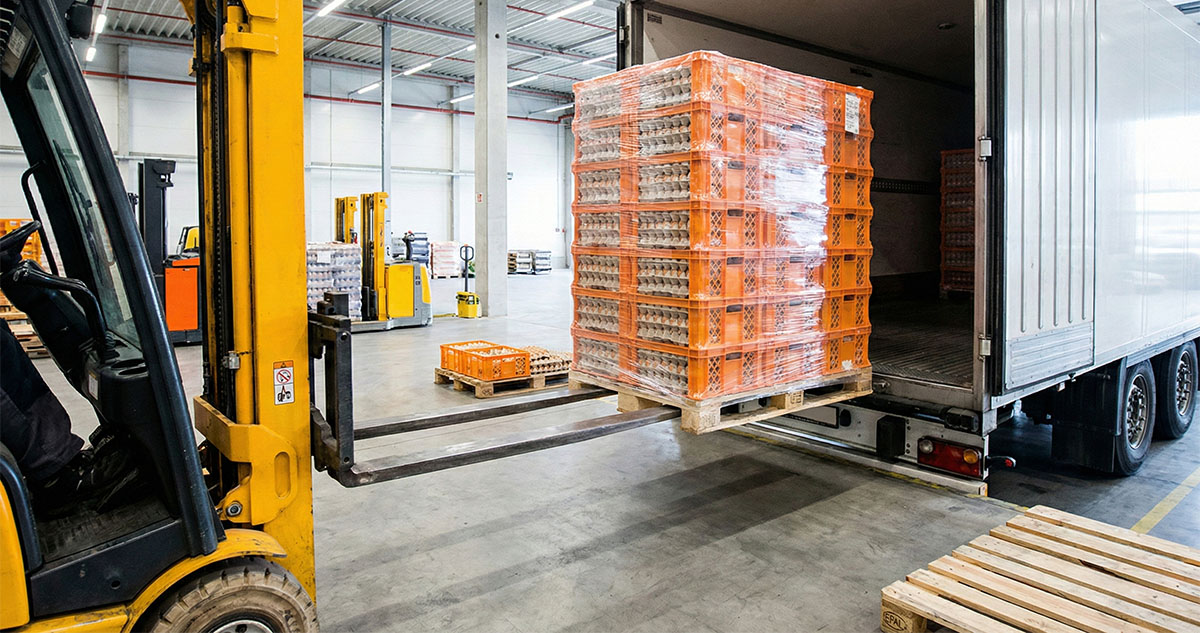


It’s 4 a.m. at a co-packer facility. A temperature-controlled LTL shipment is loaded, wrapped, labeled, and ready for a grocery distribution center.
The trailer leaves on schedule, the paperwork appears complete, and everyone involved believes the shipment is a success. Then the call comes later that day: the receiver rejects the load.
The pallet configuration doesn’t meet receiving specifications. Temperature documentation is incomplete. A barcode won’t scan. The shipment enters exception handling and the delivery is unsuccessful. The truck did its job and the freight arrived, yet the shipment still failed.
In food and beverage LTL, major failures are rarely caused by major mistakes. More often, they result from small details that nobody verified before the freight left the dock. Shippers need to find transportation partners they can trust because they’re able to catch these details before they become expensive problems.
Temperature Documentation: The Cold Chain Begins Before the Trailer Door Closes
Hint: the reefer is not the whole cold chain. Many shippers assume that assigning a refrigerated trailer solves temperature control concerns. In reality, food and beverage receivers increasingly expect a documented temperature chain that proves product integrity from pickup through delivery.
That documentation often begins with a few basic items:
- Reefer set point documented on the bill of lading
- Physical or digital devices tracking in-transit temps
- Product pulp temperatures or temperature probe readings at pickup
- GPS + temperature visibility platforms carriers/brokers use to monitor shipments
- Clear instructions regarding temperature ranges, noting frozen, chilled/refrigerated, and controlled ambient
A refrigerated trailer can only maintain conditions if the proper procedures are followed before loading begins.
Why Missing Documentation Becomes a Receiving Problem
A shipment may arrive at the correct temperature and still encounter receiving issues if supporting records are unavailable. When questions arise regarding product condition, documented evidence becomes critical. Without temperature records, disputes can be difficult to resolve.
The FDA’s Food Safety Modernization Act (FSMA) Sanitary Transportation Rule requires carriers, shippers, loaders, and receivers to maintain appropriate sanitary transportation practices, including temperature control procedures and records when necessary.
The most important question at pickup is simple: Can we prove this product remained within specification from the moment it was loaded? If the answer is unclear, the shipment may already be at risk.
Dock Delays and Chain-of-Custody: A Four-Hour Pickup Can Create a Four-Day Problem
Time matters before the truck ever moves. Many food and beverage products operate within strict handling and delivery windows. Produce, dairy, frozen foods, beverages, and other temperature-sensitive commodities often have little room for delays.
Problems can begin before the truck ever leaves the facility:
- Product is not staged when the driver arrives
- Loading crews fall behind schedule
- Documentation is delayed
- Reefer trailers sit loaded but stationary for extended periods
Each delay introduces uncertainty into the shipment’s chain of custody. Important timestamps should be documented, including:
- Arrival time
- Loading start time
- Loading completion time
- Departure time
- Temperature-related delays
Small Delays Become Larger Supply Chain Problems
Consider a common scenario:
A truck is scheduled to depart at 6 a.m. but does not leave until 10 a.m. due to loading delays. The delivery was planned around the original timeline. The distribution center has limited flexibility. The shipment misses its slot and must be rescheduled.
Suddenly, a four-hour pickup delay becomes a multiday supply chain disruption. The freight itself may be perfectly acceptable, but shelf life is reduced, inventory plans are disrupted, and receiving schedules become more complicated.
A successful pickup isn’t simply when the trailer is loaded, but when the shipment leaves on time with a documented, uninterrupted custody chain.
Pallet Compliance: The Grocery DC Starts Grading Your Freight Before It Is Unloaded
The moment a pallet crosses a distribution center’s dock plate, it enters a highly engineered receiving operation designed for speed and consistency.
Grocery and foodservice distribution centers move enormous volumes of freight every day. Many rely on cross-dock operations and tightly controlled workflows that depend on standardized pallet configurations.
The receiver doesn’t evaluate freight based on how efficiently it moved through your warehouse. It evaluates freight based on how efficiently it moves through theirs. For most grocery and foodservice operations, that begins with the standard GMA pallet footprint:
- 48 inches by 40 inches
- Four-way entry
- Stringer construction (three stringers)
- Seven top deck boards
- Five bottom deck boards
- Nominal load capacity of approximately 2,500–2,800 lbs. in uniformly distributed loads
A warehouse may function perfectly with alternative pallet sizes internally, but many receivers will evaluate compliance against their own standards.
The Four Pallet Variables That Determine Whether a Load Receives Cleanly
Before a pallet is ever unloaded, receivers evaluate a handful of physical characteristics that determine how efficiently that freight can move through their operation. Grocery and foodservice distribution centers are designed around standardized handling processes, and even minor deviations can trigger delays, manual intervention, or compliance deductions. Four pallet variables in particular have an outsized impact on whether a shipment moves seamlessly through receiving or gets flagged for exception handling.
Stack Pattern
Stacking configuration affects both stability and handling performance. Column stacking maximizes vertical strength and cube utilization but concentrates weight on pallet corners. Interlocked or brick patterns distribute weight differently but can affect load stability and stretch-wrap performance.
Many retailers establish acceptable stacking methods based on product category and case dimensions. The wrong stack pattern can result in crushed cases, shifting loads, and compliance deductions.
Pallet Height
Maximum pallet heights vary by receiver, product type, and sometimes individual distribution center. Retailers and foodservice organizations publish receiving requirements that suppliers are expected to follow. These requirements can change over time, making periodic verification important.
Over-height pallets can create significant issues:
- Automated systems may not accommodate them
- Receivers may refuse the shipment
- Pallets may require breakdown and rework
- Compliance chargebacks may follow
Overhang and Underhang
Cases should neither extend beyond pallet edges nor sit excessively inside them. Overhang creates vulnerability during handling. Every turn made by a pallet jack increases the likelihood of damaged product.
Excessive underhang creates instability, allowing freight to shift inside the stretch wrap during transit. Small dimensional issues at pickup often become major receiving problems later.
Label Placement and Scan Readiness
Most grocery and foodservice receivers rely heavily on GS1-128 and SSCC barcode labels. Labels generally need to be:
- Consistently placed
- Visible on multiple pallet sides
- Easy to scan
- Free from distorted or obstructive stretch wrap
A perfectly built pallet can still fail receiving if the barcode cannot be scanned, which can be caused by the label being placed under the shrink wrap. The consequences often include:
- Manual exception handling
- Extended unloading times
- Missed appointments
- Vendor compliance chargebacks
And those chargebacks frequently appear weeks after delivery.
Major Retailers Have Their Own Pallet Requirements
Big-box receivers have their own quirks on top of those four pallet variables:
Walmart: The retailer’s OTIF (On-Time In-Full) program ties palletization to chargebacks. Specific case-stack pattern requirements vary by category. Walmart’s Supplier Quality Excellence Program (SQEP) includes pallet charges related to poor securement, incorrect tier construction, missing or incorrect mixed date labeling, and bagged items missing pallet barriers. You can find an SQEP audit checklist here.
Kroger: Kroger is stricter on label scan readability than most of its peers. For instance, barcodes that fail to scan trigger immediate defect chargebacks. Also, mixed SKUs are not permitted without explicit buyer authorization, and pallet weight must not exceed DC receiving limits, which must be verified before shipping. You can find Kroger’s vendor compliance scorecard here.
Sysco: The foodservice wholesaler has very specific requirements for pallet composition and loading, which you can find here. Any violations can result in an OS&D claim and charges. Sysco also strictly regulates how different SKUs are mixed on inbound pallets. You may mix multiple SKUs in the same case layer only if individual SKUs are ordered in quantities less than a full tier/layer. Otherwise, full layer quantities must be placed on their own dedicated pallets.
US Foods: US Foods requires inbound vendor shipments to be strictly unitized, properly shrink-wrapped, and clearly labeled with GS1-compliant pallet tags and packing slips to prevent delays and potential restacking fees at the receiving dock. You can find an FAQ on US Foods packaging guidelines here.
Labeling and Lot-Code Visibility: The Details That Matter During a Recall
Traceability has become just as important as temperature control and on-time delivery in modern food supply chains. Grocery retailers, foodservice distributors, and regulatory agencies expect shipments to be easily identifiable throughout the product life cycle.
When labels, lot codes, or supporting documentation are missing or inconsistent, a routine delivery can quickly turn into a compliance issue, especially during product withdrawals, quality investigations, or recalls.
Receiving Is About Traceability, Not Just Delivery
Food supply chains depend on rapid traceability. During quality events, product withdrawals, or recalls, retailers need to quickly identify affected products and isolate inventory.
That requires:
- Clear case markings
- Accurate pallet labels
- Visible lot codes
- Production dates
- Consistent documentation
Warehouse records, shipping paperwork, and receiver information must align.
The Cost of Poor Visibility
A shipment can arrive in excellent condition and still create compliance problems if traceability information is incomplete.
When lot codes are difficult to identify or documentation is inconsistent, receivers often resort to manual inspection processes. Manual inspections slow unloading, increase labor requirements, and raise the likelihood of penalties.
The operational reality is simple. If the receiver cannot immediately determine what the product is, where it came from, and when it was produced, the receiving process becomes significantly more complicated.
The Five Questions That Prevent Most Food and Beverage LTL Problems
Before a shipment leaves the dock, experienced transportation partners ask a handful of critical questions.
- Who is the receiver?
- What are that receiver’s current pallet requirements?
- What are the case dimensions and pallet configuration?
- What stack pattern is recommended for this product?
- Where are the SSCC labels positioned?
That’s it. Five questions that take 10 minutes. It’s often the difference between a successful delivery and a chargeback discovered three weeks later.
Food and beverage LTL success is frequently determined by what happens before the truck departs, not after.
Wicker Park Logistics: Moving Food and Beverage LTL How the Receiver Wants It
Food and beverage LTL is not simply about moving freight from point A to point B. It is about understanding the receiving environment before the shipment leaves the dock. Small pickup-side details determine whether a shipment moves smoothly through a grocery or foodservice distribution center or becomes trapped in costly exception handling.
Wicker Park Logistics helps food and beverage shippers reduce preventable failures through proactive pickup verification, cold chain awareness, and extensive experience managing retailer and foodservice requirements. By focusing on the details that matter most — temperature documentation, custody chain integrity, pallet compliance, and traceability — Wicker Park helps protect product quality, improve receiving performance, and reduce costly compliance issues.
The shipment may look perfect when it leaves the dock, but the goal is making sure the receiver thinks so too. Learn more about Wicker Park Logistics’ food and beverage LTL expertise and discover how we help shippers protect product quality, compliance, and on-time performance from pickup through final delivery. Contact us today for a quick quote.


